
History of EMWA (1992 – 2008)
The history of EMWA: personal and possibly unreliable recollections
by Geoff Hall
Sitting down to write the history of EMWA reminds me of Tolstoy’s comment on historians that they are like deaf people who go on answering questions that no-one has asked. My feeling is that EMWA’s members are likely to be more concerned with the future of the association than its past. Nevertheless, in case there are a few people who are inwardly curious about the how, why, and in particular the when of EMWA, here goes. I tell a tale of flirtation, marriage, divorce, remarriage, betrayal and separation—and that’s just the relationship between EMWA and its American cousin, the American Medical Writers Association (AMWA).
But let’s start at the beginning, or before the beginning. My researches uncover a succession of meetings that took place before the generally recognised first meeting of EMWA in Brussels in February 1992.
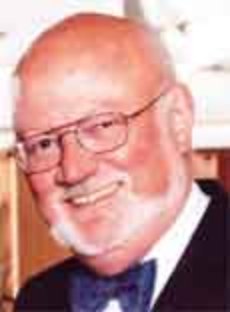
The initial idea grew out of an informal lunch enjoyed by Mike Matthews and Stephen de Looze in London after they had bumped into each other at the San Francisco AMWA meeting in 1986. There followed a meeting at the Alderley Park HQ of Zeneca between Stephen, Mike, Brenda Moore and others on 11 October 1990. Next, 14 individuals from 9 European-based pharma companies met at the Quorn Grange Hotel in Loughborough in the English East Midlands. Mike Matthews recalls, “There was a subsequent ‘pre-Brussels’ informal meeting somewhere in Belgium (Rixensart?) with the SmithKline vaccines crew, who were then key in carrying the whole thing forward.”
Two individuals at SK Biologicals deserve the credit for taking the whole thing forward: Jane Wynen—like so many important characters in the history of EMWA, an American based in Europe—and Ceara Roche. Ceara’s daughter Moya was born in April 1993 and she returned to her native Ireland. When EMWA came to Dublin in 2000 we were delighted to honour Ceara’s contribution.
Aaron Bernstein, EMWA’s second president is now based back in the US. He is a frequent visitor to EMWA meetings and a workshop leader.
The rest of the day was given over to discussing the creation and structure of EMWA. Should we be affiliated with AMWA? Should we model our meetings and constitution on AMWA? We resolved that we would be a chapter of AMWA, the idea being that we could make use of AMWA’s established structure and administration to help us get established. The vote was 24 to 5. The AMWA Board of Directors approved the formation of the chapter in March 1993.
Eindhoven in the Netherlands hosted the second meeting. The single day was filled with 3 one-and-a-half hour seminars and EMWA’s first 3-hour workshop, entitled ‘Writing Abstracts’ and delivered by an AMWA past-president Howard Smith. The seminars were ‘Globalizing Clinical Research Reports’ (Chris Preston, Hoffmann-La Roche, Basel), ‘Illustrations for Scientific Publications’ (Anthony Bowley ABCommunications, Switzerland—a helpful guide to the perennial poser of when to use graph, table or text) and ‘An Overview of Statistical Errors in the Medical Literature’ (James DeMuth, University of Wisconsin, Madison). This last remains one of the best talks on statistics I have ever heard.
The Bruges conference in March 1995 was an important milestone. It was the first conference with a programme of workshops—OK so there were only 4, but it was a start— and it was the scene of one of EMWA’s few rows (over our relationship with AMWA, of course).

The EC presented the agenda for the business meeting in a bulky folder. First up was an overview of membership and finances by Philip Cooper. (No longer involved in EMWA, Philip played a vital role in EMWA’s early years as our longserving and long-suffering treasurer. A genuine unsung EMWA hero.) Philip reported that we had 149 members, 51 more than the previous year, and SFr 18,000 in the bank— about USD 8,600/GBP 5,440/EUR 6,620 at that time.
Item 3 was the tricky one—the future of AMWA and EMWA. Members were to vote on whether or not to continue as a chapter of AMWA. The case in favour consisted of continuing to benefit from AMWA’s greater infrastructure and experience. The case against was primarily the exorbitant costs of affiliation (85% of the membership dues were paid to AMWA) and the reluctance of AMWA to allow workshops run in Europe to count for AMWA accreditation. EMWA could not offer accredited workshops with local workshop leaders without a lengthy, (some might say tortuous), approval process for both the workshop leader and the workshop content, including attending the AMWA yearly conference to deliver the workshops. There were other issues, of course, as having members on another continent required a flexibility that AMWA simply was not prepared to accommodate. For example, the conference registration forms took longer by post to reach Europe and many workshops were already full before European members had even received their forms (this was pre-Internet, folks). One objection raised during my term as president was that the Americans were unsure if European degrees could be considered as equal in value to US degrees! Over the years, reasonable people on both sides attempted to reach sensible compromises only for them to be scuppered by a few intransigent individuals. No change was agreed to in the relationship, but tempers flared and the fault lines were deepening.
EMWA Main Annual Conferences
| Year | Venue | President elected |
| 1992 | Brussels, Belgium | Jane Wynen |
| 1993 | Eindhoven, Netherlands | Aaron Bernstein |
| 1994 | Basle, Switzerland | Leen Ashton-Vanherle |
| 1995 | Bruges, Belgium | John Aitken |
| 1996 | Berlin, Germany | Ben Young |
| 1997 | Edinburgh, Scotland | Barry Drees |
| 1998 | Madrid, Spain | Gerold Wilson |
| 1999 | Copenhagen, Denmark | Geoff Hall |
| 2000 | Dublin, Ireland | Keith Veitch |
| 2001 | Montpelier, France | Julia Forjanic Klapproth |
| 2002 | Prague, Czech Republic | Julia Cooper |
| 2003 | Lisbon, Portugal | Isabelle Thirolle |
| 2004 | Budapest, Hungary | Adam Jacobs |
| 2005 | Malta | Michelle Derbyshire |
| 2006 | Lyon, France | Michelle Derbyshire |
| 2007 | Vienna, Austria | Julia Forjanic Klapproth |
The venue for the 1996 conference was Berlin and it was generously supported by Schering AG who contributed to speakers’ and workshop leaders’ expenses as well as providing free use of the company’s first class conference facilities. The plans for the conference were thrown into some confusion when Colm Benson, the designated organiser of the event, left Schering to return to Ireland—to become a farmer, I recall. The baton was taken up by Jerry Wilson—at that time a fairly new face in EMWA—and the organisation’s first 3-day event was a huge success. EMWA was still a chapter of AMWA at this stage and Barry Drees re-designed AMWA’s existing workshop of ‘Tables and Graphs’ and amazingly actually got it approved by AMWA. Together with Valerie Moore, they were the first Europeans to provide workshops for AMWA accreditation. There were just 6 workshops including Art Gertel’s workshop on project management, extended to 6 hours, and a guest speaker.
And so to EMWA’s first conference in the UK, in Edinburgh. Vice President Barry Drees and Julia Spivack took on the task of organising the event and it was memorable for a number of reasons. The conference banquet was a splendid traditional Scottish banquet featuring haggis, neeps and tatties and a piper in full regalia, addressing the haggis in the words of Rabbie Burns:
“Fair fa’ your honest, sonsie face, Great chieftain o the puddin’-race! Aboon them a’ ye tak your place, Painch, tripe, or thairm: Weel are ye wordy of a grace, As lang’s my arm.”
Barry Drees became President (wearing a kilt) and it was in Edinburgh that Art Gertel’s massive contribution to and support for the fledgling EMWA was recognised with life membership. The scale of the task undertaken particularly by Julia Spivack in organising the conference was immense. In those days EMWA was run entirely by volunteers, i.e. there was no paid Head Office. Workshops, speakers and the social programme all had to be arranged and I recall Julia, Marian Hodges and a few earlier arrivals frantically collating the conference packs before the scheduled registration time. Barry tells me that he was up until the wee hours of the morning cutting out delegate badges and putting them into their plastic holders. I especially enjoyed the visit to the Scotch Malt Whisky Society for a tasting and an amazing 4-hour tale of the history of Scotland and whiskey, told seemingly in one breath. Organised by Nick Thompson this was a night to try and remember.
Nick Thompson in characteristic pose at the Dublin conference. Tragically, Nick was killed in a car crash the following winter. He is remembered in EMWA’s award for outstanding contributions to the association, the Nick Thompson Fellowship, instituted by 2001 president Keith Veitch.
The do-it-yourself approach to conferences was, however, getting more and more impractical with upward of 100 people expected for the next conference and Barry’s key innovation as president was to appoint professionals and establish Head Office. Enter Phillipa Clow and her small team. Another milestone was that EMWA became independent of AMWA and changed to affiliate rather than chapter status which meant that EMWA was essentially on its own. Importantly, this allowed us to keep our money and approve our own workshop leaders.
Madrid was the venue for our 1998 conference. In previous years we had aimed to invite an eminent keynote speaker. The choice for this year was David Sharp, deputy editor of The Lancet which led to EMWA’s first bit of real fame—an editorial in The Lancet (Sharp D. A ghostly crew, Lancet 1998; 351:1076). This article set off a chain of events, articles (e.g. Jacobs A. Time for the ghosts to take on physical form, Lancet 2004; 364:487-488) and correspondence that culminated in the creation of European Medical Writers Association (EMWA) guidelines on the role of medical writers in developing peer-reviewed publications (Jacobs A and Wager E. Current Med Res & Opinion 2005; 21, 2: 317–321).
Gerold Wilson took over as President in Madrid and I was his Vice President. Our first priority was organisation. At that time we didn’t really have a satisfactory constitution and, more importantly, we didn’t have a bank account. All EMWA’s cash was held in a bank account in the name of the treasurer. If Philip Cooper had been struck down by a Basle bus the whole of EMWA’s wealth would have been lost or at least subject to Swiss inheritance taxes. EMWA became EMWA limited, a ‘company limited by guarantee’. Also, during an eventful 2 years, we established our own educational committee and educational programme to provide certification. The 10-year relationship with AMWA finally ended officially as EMWA was big enough to stand on its own feet.
At the Copenhagen conference, education officer Julia Cooper and I set out to have more workshops than ever before. OK so it was only 15, but it was a step forward. Another innovation was the first autumn one-day conference in Henley in the UK. On the financial side, I had set a target of building up a reserve equivalent to one year’s turn-over. The idea behind this was to cover for any disaster or emergency up to and including the cancellation of a spring conference.
Dublin 2000 was a wonderful conference. Membership, which had been 240 in April 1999 rising to 260 in May, had swelled to 350 by April 2000. We now offered 19 workshops. The keynote presentation was from Patrick Salmon of the Irish Medicines Board and there were entertaining presentations from Art Gertel, Stuart Woods and Michael Paling—a pharmaceutical advertising guru who shared the inside information on Viagra. The social calendar featured a banquet with ‘Riverdance’ style traditional Irish dancing and included an attempt by the dancers to teach several past-presidents a few steps on stage. Qualified medical help was present just in case.
And so on to Montpelier. At the banquet, President Keith Veitch noted sadly the loss of one of our most beloved members and, with the agreement of the Executive Committee, announced the creation of the Nick Thompson Fellowship in his memory. Art Gertel, already a life member, was naturally the first recipient. I will never forget the mixture of shock, pride and any number of other emotions that hit me when Keith announced that I too was to be given this award. From Montpelier, we headed east and a conference in beautiful Prague and then to Lisbon. Details of these and more recent conferences can be found on the EMWA website and this article is getting a bit too long.
For various reasons, I was unable to get to Budapest in 2004, but I have attended every other EMWA main conference since the start. I believe that what we have built over these past 16 years is remarkable. Obviously the educational programme stands out as the key achievement. However, for me the main benefit of EMWA membership has been the friendships made. It seems somehow bizarre that several of the people I consider among my closest friends are people who I only see for a few days each year. But it’s the truth. I look forward to making more new friends at this year’s conference in Barcelona.
History of EMWA (2008 – 2021)
The early years of EMWA
by Art Gertel medscicom@rcn.com
EMWA has now been in existence for 25 years! How is that possible? Time has flown by, and brought with it much change and growth of which we should be proud. This is an opportunity to reflect back on the organisation as it was at its genesis, is today, and has the potential to become in the future. As one who was around in the antediluvian days, this article presents an opportunity to recall the early years and indulge in a trip down Memory Lane. This allows me to cover the early days of EMWA and to fondly recall colleagues whom I now think of as friends, as well as to remember some who are no longer with us.

EMWA got its start as the European chapter of the American Medical Writers Association (AMWA).
The primordia of a medical writing group in Europe can be traced back to October 11, 1990, when a group of 14 individuals, representing nine European-based companies, met at the Quorn Grange Hotel in Loughborough, UK, to discuss the possibility of creating a professional medical writing association in Europe. This was before even my time!
In April of 1991, I received a letter from a steering committee representing a collective of European medical writers. They invited me to respond to a questionnaire designed to determine whether there would be sufficient interest to formally establish a European Medical Writers Association. At that time, over 75 people across Europe had voiced interest in such an organisation. Response would drive the effort to convene an inaugural meeting.
It seems that there was enough interest, resulting in a meeting on February 21, 1992, in Brussels. This meeting was attended by 32 people from nine countries, with an interest in forming a professional association. The meeting, chaired by Jane Wynen of SmithKline Beecham, opened with a welcome address by Dr Mike Matthews (whom, I am pleased to note, was an exhibitor at the EMWA 2017 Birmingham conference). Although there were no workshops, there followed a presentation by Dr Helen Frampton on Medical Writing in the Pharmaceutical Industry and my presentation on Enhancing the Reviewability of Regulatory Documents. Following luncheon, the results of the aforementioned questionnaire were discussed, and I then spoke on behalf of the American Medical Writers Association (AMWA), offering assistance and, perhaps, an opportunity to integrate the European medical writing community into a global association. This was not well received by some in attendance who viewed this as an exercise in “reverse-colonialism”. An ‘energetic’ debate ensued after which a vote was taken.
I was surprised and gratified to find that a clear majority (24 of 29) voted to become a chapter of AMWA. An Executive Committee was established, with Jane Wynen as President and Geoff Hall as Vice President, and the European Chapter of AMWA was formed. It is important to note that the essence of any organisation is embodied in its members. This requires not only that people attend the meetings, but that they volunteer their time and energy to the maintenance and continued evolution of EMWA as a meaningful resource to medical writing professionals. We must continue to build upon the foundations established by those who had the vision and the dedication to create this wonderful organisation and to ensure that it remains a source of value to those in our profession.
It is also important to remember some of those who dedicated so much but have left us too soon. EMWA honours two of these individuals through the Geoff Hall Scholarships and the Nick Thompson Fellowships. Twenty-five years! Quite a milestone! I hope we will continue to cherish and nurture this organisation and continue on for at least another quarter century.
From 2008 to 2019
by Abe F. Shevack aspscientist@googlemail.com
So much has happened over the years. In 25 years, we have grown from the first 32 attendees in 1992 to more than 1,000 members. EMWA is more dynamic than ever thanks to a large group of volunteers and an excellent Head Office, run by Kingston Smith. Sometimes it is good to sit back and reflect on the old days and how we are progressing into the future. Geoff Hall wrote a personal and passionate recollection of EMWA’s history up to 2007. Needless to say, the pace of change has increased since then and the history he presented was in need of an update. I am therefore starting where Geoff left off citing the high points of the terms of past presidents and occasionally letting them tell their own stories.

Julia Forjanic Klapproth (2007 and 2008)
During Julia’s term in office the Press Officer position was established (now called the Public Relations Officer) to represent EMWA to the public. In addition, to encourage EMWA members to volunteer, the subcommittee organisation was put on firm footing. The EMWA “members only” section of the website was introduced, as was the first 5-year strategic plan. EMWA also contributed to the update of the guidance for Good Publishing Practice during Julia’s time in office.
Helen Baldwin (2009)
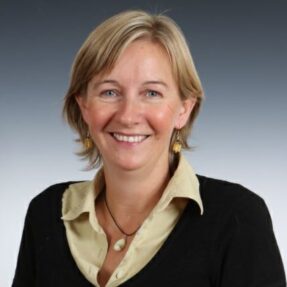
Helen presided over EMWA relocating its base from Switzerland to the UK, and engaging a new company, MCI Group, to administer the Head Office. Helen introduced the first web-based conference survey, reduced EMWA’s expenses by negotiating preferred hotel rates for conferences, introduced online downloading of workshop assignments from the website, established the Executive Committee (EC) role of conference manager, reduced the term of vice president to 1 year, and began establishing a social media presence for EMWA.

Laurence Auffret (2010)
Laurence was behind the design and first implementation of the 5-year EMWA Strategic Plan. The strategic plan details the future development of EMWA, a format is still used today. Laurence also had the idea of creating a standard EMWA presentation accessible to any member to download and use to promote the organisation, describe the scope of our activities, its benefits, the conferences, and the value of EMWA membership. During her term, a searchable archive of The Write Stuff was set up on the EMWA website and was very active in encouraging and recruiting new volunteers. She also continued the “buddy system” to help first-time attendees get oriented during the conferences. Laurence remains an active workshop leader with a keen interest in online communication.
Rita Wellens (2011)
Over the years changes came about in EMWA as a result of crises where major decision had to be made to ensure the smooth running of the organisation. In May 2011, EMWA was forced to find a new management company. Kingston Smith Association Management was selected thanks to a lot of hard work by Rita and the rest of the EC. Over the years, we have been quite satisfied with the way they are running EMWA’s Head Office. During the year, with a lot of hard work by former Editor-in-Chief, Elise Langdon-Neuner, we also switched from our original publication, The Write Stuff, to a new professionally published journal, Medical Writing.

Susan Bhatti (2012)
Susan made further strides in improving EMWA. During Susan’s term in office, starting in 2012, the first EMWA Spring conference Symposium was organised, the Geoff Hall Scholarship was established, and a merchant’s bank account was set for EMWA members enabling them to pay conference fees via credit card. Together with Vice President Andrea Rossi, she broadened EMWA’s contact with other professional organisations such as the International Society for Medical Publication Professionals (ISMPP) and the Institute of Clinical Research. Susan’s other accomplishments included extending the autumn conferences to enable delegates to take up to four workshops, and initiating webinars and online voting with the Honorary Secretary, Sarah Choudhury for Executive Committee candidates.

Andrea Rossi (2013)
Andrea became President of EMWA at a time when EMWA was financially sound, which allowed the Executive Committee to introduce additional strategic improvements for the future of the organisation that we are still building upon today. During Andrea’s tenure as President, EMWA’s finances continued to grow, giving us added optimism for its future. The EC also initiated a new voting system to help increase participation, and sponsorship, members, and conference attendance continued to grow, allowing subscription fees to remain stable. At the conferences, a full-day symposium was added, with officials from the European Medicines Agency attending the first installation. Phil Leventhal took over as Editor-in-Chief and, with a new Editorial Board, added new enthusiasm to the journal. EMWA also created a Social Media group and began establishing a presence of social media, and EMWA’s website (www.emwa.org) was re-designed and relaunched thanks to a lot of hard work by Webmaster Diarmuid De Faoite and Kingston-Smith.
Julia Donnelly (2014)
As you can see, social media became increasingly important for communicating between our members and for promoting the organisation. This continued during the presidency of Julia Donnelly, who also represented and spread the word about EMWA to a larger international audience.
Sam Hamilton (2015)
Sam’s presidency can be characterised as a time when a number of new initiatives were started to add value for our more experienced members. Sam put in an enormous effort to initiate and guide the Core Reference document for clinical study reports, the Expert Seminar Series, and the Regulatory Public Disclosure Special Interest Group (SIG).

Alison Rapley (2016)
During Alison’s time as President, the document repository for all executive committee documents was set up as well as the EMWA conference minisite. A dedicated email system was established for EMWA, using Office 365. The webinar programme was expanded, a position statement was drafted together with AMWA and ISMPP on the role of professional medical writers, and a dedicated managing editor was hired for Medical Writing.

ABE SHEvack (2017)
Abe had the honour of serving as President at the time of EMWA’s 25th Anniversary which was celebrated with articles in the MEWs and a special pin commemorating the event sent to all members. During Abe’s tenure, the EMWA News Blast was started. This initiative was aimed at providing the membership with short digests of news about EMWA conferences and initiatives, current regulatory guidelines, and news of general interest to medical writers.
Abe is the architect and chair of the Ambassador’s Programme supported by dedicated EMWA volunteers to reach out to students and graduates at university and professional career events to inform them about medical writing and the benefits of joining EMWA.
During Abe’s term, EMWA joined with American Medical Writers Association (AMWA) and the International Society for Medical Publication Professionals (ISMPP) in translating and publicizing the Joint Position Statement on the Role of Medical Writers into multiple European languages. EMWA also started collaborating with the Board of Editors in the Life Sciences (BELS) to hold their editing proficiency exam during EMWA Spring conferences.

Tiziana Von Bruchhausen (2018)
Tiziana’s utmost aims were to tailor the organisation to members’ needs, to broaden the offer for more experienced writers, and to strengthen EMWA’s position externally. The most exciting initiative during Tiziana’s presidency was related to the hot topic of predatory publishing: a working group was established, which later launched the Medical Communications Special Interest Group (SIG); in parallel, EMWA led the collaboration with AMWA and ISMPP for a joint position statement on predatory publishing. A further area of interest for members was identified, and the Veterinary Medical Writing SIG was launched.
EMWA kept growing and diversifying to address the members’ needs. In order to attract new members and coach those interested in a career in medical writing, a new conference event (Getting into Medical Writing) was designed in cooperation with the Ambassador’s Programme. The Nick Thompson Fellows (NTFs) were asked to explore ways to provide advance opportunities for more experienced writers, as well as to retain experienced members. Last but not least, the EC and the Head Office successfully coped with up-to-date topics such as GDPR and Brexit.

Barbara Grossman (2019)
Barbara started her 1 year as EMWA President expecting to organise the celebrations for EMWA’s 50th conference in Prague in May 2020. What’s that expression about the best-laid plans?
Looking back, the year was like a roller-coaster ride: from the highs of 2 very well-attended EMWA conferences in Vienna and Malmö in 2019, and the many achievements between times, to the low of the COVID‑19 pandemic and its impact on ‘normal life’ (including cancelling the 50th conference).
What stood out for Barbara, especially in the weeks leading up to Lockdown, was the wonderfully supportive Executive Committee, the Head Office team, and many of EMWA’s volunteers, who made even the most challenging tasks do-able. They truly stepped up to the plate, producing alternative virtual online offerings including more frequent webinars and a virtual Expert Seminar Series.
In early 2020, a significant change was made to the packaging for mailing the EMWA Journal to its members. Instead of a plastic wrap, the packaging was changed to an eco-friendly type made from potato starch that was 100% compostable. This change coupled well with the launch of a new special interest group (SIG) on sustainability, joining the 2 SIGs established at the May 2019 conference:
- Medical Communications SIG
- Veterinary Medical Writing SIG
and the 3 previously established SIGs:
- Medical Devices
- Pharmacovigilance
- Regulatory Public Disclosure
During Barbara’s term, representatives of EMWA worked closely with the American Medical Writers Association (AMWA) and the International Society for Medical Publication Professionals (ISMPP) to produce a Joint Position Statement (JPS) on Predatory Publishing. With the help of many talented EMWA members who were also linguists, EMWA was able to arrange for translations to be made in several languages – of this JPS and an earlier JPS on: The Role of Professional Medical Writers. The translations served to spread awareness among non-English speakers of the responsibilities of medical communicators.

Beatrix Doerr (2020)
Beatrix was EMWA’s first “virtual president”, attributed to the circumstances of the COVID-19 pandemic. Together with EMWA’s Executive Committee, she needed to transform the cornerstone of EMWA, the F2F conferences, into virtual meetings. The success of EMWA’s first virtual conference led to the decision to continue with virtual Autumn conferences once the pandemic is over, for both sustainability reasons and to allow members who cannot attend F2F conferences to participate.
Beatrix introduced new learning opportunities such as Meet & Share sessions and the field of safety reporting for medical devices. Further, during her tenure, DataDock registration was achieved.
Another key topic during her presidency was the recognition of medical writers and communicators:
- Electronic badges were developed to display EMWA’s certificates in a professional manner.
- Certificates of attendance for webinars were introduced.
- The EMWA logo can now be downloaded by EMWA members, allowing them to display their current membership of this professional organisation on their website, email, etc.
To enable members to connect locally, the EMWA Member Directory was developed to which EMWA members can opt in. Furthermore, a code of behaviour was developed to emphasise that EMWA values diversity.
Lastly, to foster ethical standards, the quality of publications, and to increase the recognition of medical writers, Beatrix has co-authored the joint position statement on medical publications, preprints and peer review that was published in Current Medical Research and Opinion and that was presented around the globe.
Carola Krause (2021)
During Carola’s presidency EMWA took its first steps in organising hybrid and sustainable conferences. In Berlin we celebrated EMWA’s 30th anniversary with an art performance from local acting students, a history session and an EMWA FAIR that accompanied the free-of-charge anniversary dinner. Leftover food from the 53rd conference was donated to refugee shelters in Berlin.
In agreement with EMWA’s Executive Committee, six new groups were founded:
• Getting into Medical Writing – co-chaired by Evguenia Alechine & Clara Chang
• Entrepreneurship Special Interest Group – chaired by Namrata Singh
• EMWA’s Creative Team – chaired by Carola Krause
• Salary and Compensation Survey Team – chaired by EMWA’s Treasurer
• EMWA Advisory Board – chaired by EMWA’s president
In 2021, EMWA ran two surveys: the Salary and Compensation Survey and the Predator Journals Survey.
Carola intensified the relationship with EMWA’s partner organizations, ISMPP, AMWA and the Australasian Medical Writers Association. The important relationship with the European Medical Agency was re-activated, and new relationships with the Spanish Medical Writers Association were established. With the help of the Sustainability Special Interest Group, Carola emphasized EMWA becoming a United Nations Sustainability Partner Organisation.
Since 2021, EMWA has focused its PR activities on the website, the journal, and three SoMe channels (LinkedIn, Twitter, and YouTube). Under the lead of EMWA’s Creative Team, EMWA launched and continued several Social Media initiatives, such as #BuzzItUp, #EMWATogetherApart, #EMWAThankYouCards, #EWMA30, and enhanced conference promotion activities.
EMWA’s Executive Committee made a great effort to update internal documents (Reimbursement Policy, SoMe guidelines, EC job descriptions and the Welcoming Letter to new EMWA members) and establish new EMWA-membership benefits (End of Year Offer, EMWA’s Hardship Fund).
In light of the global COVID-19 pandemic and the first major war in Europe since the second world war, EMWA has remained stable over time which is traced back to a significant group effort of EMWA’s Executive Committee, Head Office and all volunteers that continuously strive to promote the integrity and importance of our profession.
Postscript
As you can see, EMWA has gone through a lot of changes. Our organisation continues to evolve as medical writing becomes increasingly well-known and the demand for excellent medical communicators continues to rise.

